
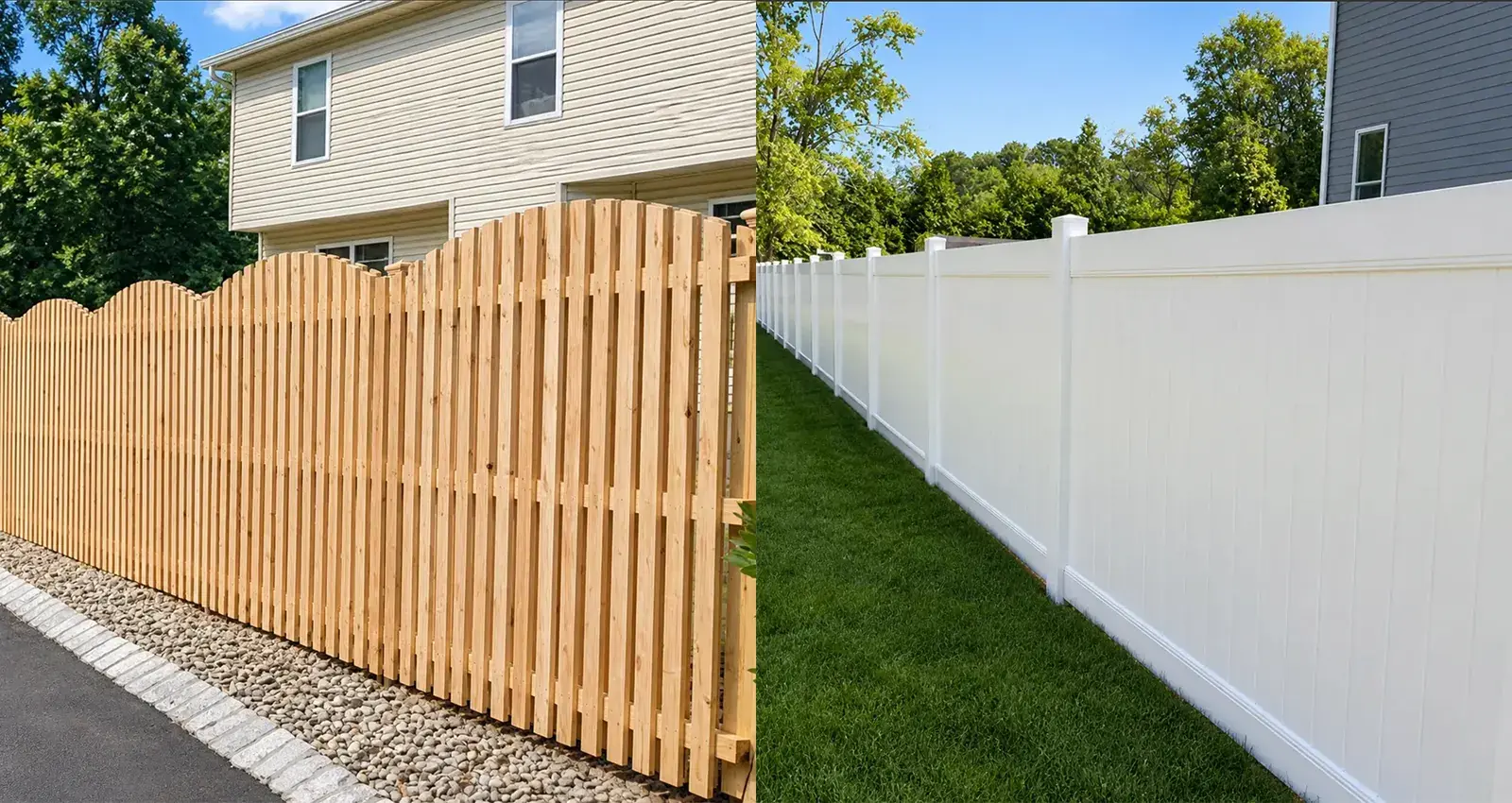
MATERIAL COMPARISON
Wood vs. Vinyl Fence: Which Material Is Right for Your Property?
An honest comparison of the two most popular fence materials in central New Jersey. Cost, lifespan, maintenance, aesthetics, and the situations where each material wins. From a NJ contractor that installs both — and isn't going to pretend one is universally better.
The Most Common Fence Decision in NJ
For 60% of the homeowners who call us, the decision comes down to one question: wood or vinyl? Both are popular residential fence materials, both work for privacy and decorative applications, and both can be installed across central New Jersey without issues. But they're fundamentally different products with different strengths.
This article walks through the real tradeoffs between wood and vinyl — not the marketing version, but the honest one. We install both materials regularly and we don't have a strong preference. The right answer depends on your goals, your budget, and what you value in a fence. By the end of this article, you should have a clear sense of which material fits your situation.
A quick framing: there's no "best" material universally. There's a best material for YOU. Wood is right for some homeowners. Vinyl is right for others. The wrong answer comes from picking the cheapest option without understanding the long-term tradeoffs, or picking the "premium" option for status reasons when the alternative would have worked better for your needs.
Wood vs. Vinyl: The Quick Comparison
When Wood Is the Right Choice
Wood fencing wins in several specific situations. If any of these match your priorities, wood is worth strong consideration:
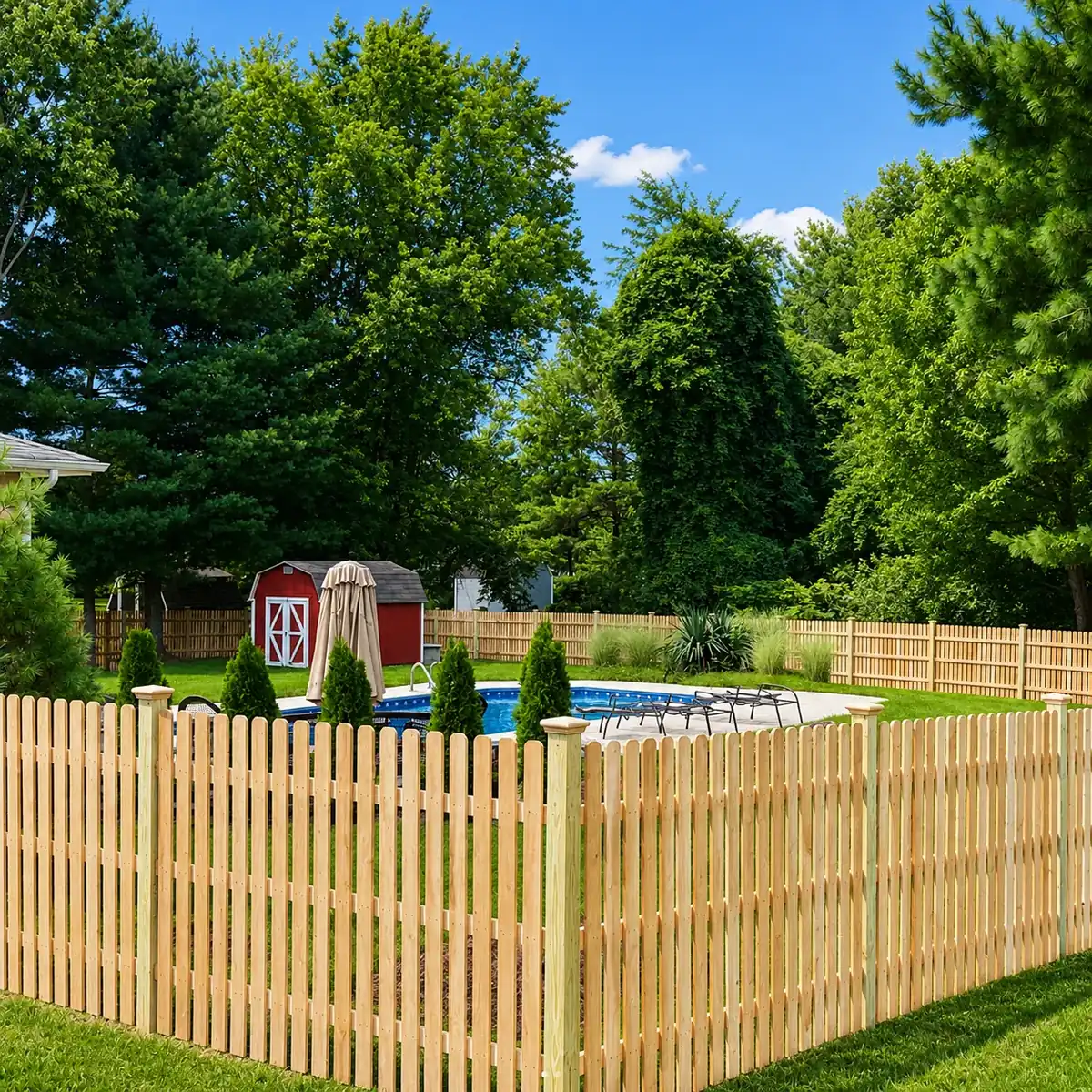
- Budget is the primary constraint. Pressure-treated wood is typically 30-50% cheaper per linear foot than vinyl. If you need a fence now and budget is tight, wood gets you across the finish line.
- You love natural materials and weathered character. Cedar develops a beautiful silver-gray patina over time. Some homeowners specifically want their fence to age naturally and develop character — that's something vinyl can never replicate.
- The property has traditional architecture. Historic homes, cottages, farmhouses, and older established neighborhoods often look more authentic with wood. Vinyl can feel anachronistic on certain properties.
- You want full color customization. Wood can be painted any color, stained any shade, or left natural. Vinyl is locked into factory colors. If you want a specific custom look (deep forest green, dark stain, weathered brown), wood is your only practical option.
- You don't mind the maintenance. Some homeowners genuinely enjoy property maintenance. Staining a fence every few years is satisfying work. If you don't mind the upkeep, wood's higher long-term ownership cost may not feel like a cost at all.
- You expect to be in the home short-term. If you're planning to sell within 10-15 years, wood's eventual deterioration may not affect you. Vinyl's lifetime warranty matters less when you won't be the one using the fence in year 25.
When wood is right, the result is gorgeous. We've installed cedar fences that look better at year 10 than they did on installation day — the kind of weathering that vinyl simply can't fake.
When Vinyl Is the Right Choice
Vinyl fencing wins in different situations. If any of these match your priorities, vinyl is the smarter choice:
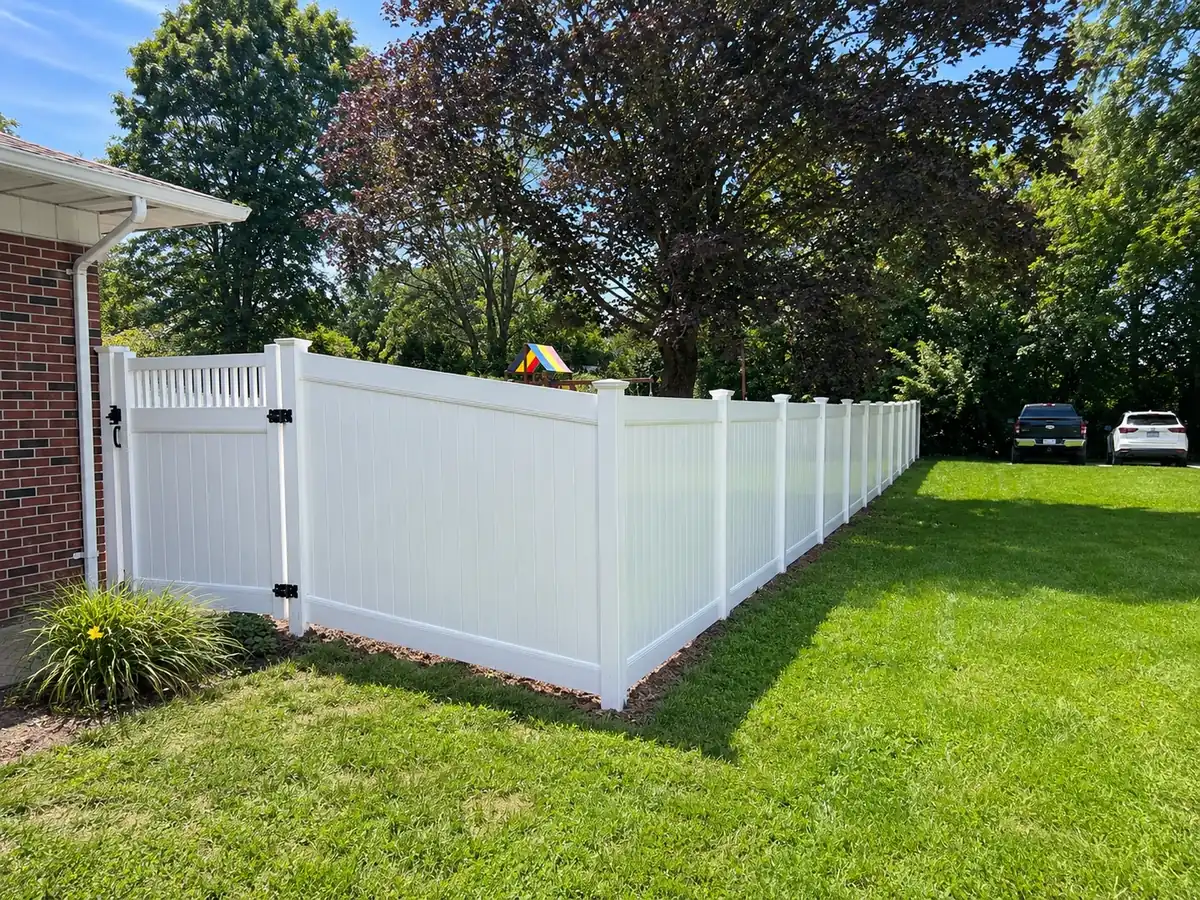
- You hate fence maintenance. Vinyl truly is zero-maintenance — no staining, no sealing, no repainting, no rot prevention. Spray it down with a hose once a year if it gets dirty. That's the entire maintenance plan for 30+ years.
- You're optimizing for total cost of ownership over time. Over a 30-year period, vinyl typically costs less than wood when you factor in staining/sealing costs and eventual wood replacement. Vinyl is more expensive upfront but cheaper over the full lifespan.
- You want a lifetime material warranty. Vinyl carries a manufacturer lifetime material warranty against cracking, peeling, fading, and product defects. Wood has no material warranty — only the contractor's labor warranty. If material durability matters to you, vinyl wins clearly.
- You're installing pool code fencing. Vinyl meets NJ pool code requirements easily and reliably. Wood gates tend to warp over time, which can cause pool gate self-closing mechanisms to fail and lead to inspection failures. For pool applications, vinyl is the safer long-term choice.
- You want a consistent, clean appearance. Vinyl looks uniform from day one to year 30. No weathering, no patina, no fading. If your aesthetic preference is "the fence I install today should look identical 20 years from now," vinyl is your material.
- You plan to be in the home long-term. If you're staying 20+ years, vinyl's longer lifespan compounds in value. Wood's shorter lifespan means you'd potentially be replacing or refinishing it during your tenure.
Modern vinyl is significantly better than the early-generation vinyl from the 1990s — better UV resistance, more realistic woodgrain finishes, stronger structural design. The vinyl we install today is genuinely an upgrade from the wood it replaces in many homes.
The 30-Year Cost Comparison
One of the most common questions we get: "But isn't wood cheaper?" Yes — upfront. Over 30 years, the picture often shifts. Here's a realistic look at total cost of ownership for a typical residential privacy fence (200 linear feet) over a 30-year period:
Pressure-Treated Wood Fence — 30 Years
- ·Initial installation: cheapest upfront
- ·Year 3: Staining/sealing
- ·Year 6: Staining/sealing
- ·Year 9: Staining/sealing
- ·Year 12: Section repairs (warped boards, replacing rotted posts)
- ·Year 15: Major refinishing or partial replacement
- ·Year 20: Likely full replacement needed
Total 30-year cost: Often 1.5-2x the upfront installation price
Vinyl Fence — 30 Years
- ·Initial installation: 30-50% more expensive upfront
- ·Year 5: Pressure wash if dirty (~$50 if you do it yourself)
- ·Year 10: Pressure wash if needed
- ·Year 15: Pressure wash if needed
- ·Year 20: Pressure wash if needed
- ·Year 25: Pressure wash if needed
- ·Year 30: Fence still under lifetime material warranty
Total 30-year cost: Roughly the installation price + minor cleaning
This isn't a fair comparison if you're staying in the home short-term, or if you genuinely enjoy fence maintenance. But for homeowners optimizing for long-term value, the math often favors vinyl despite the higher upfront cost. The actual numbers vary by project — for specifics on what your project would cost, read our Fence Cost Guide or request a free estimate.
What We Actually Install Across NJ
For full transparency: across our 8 cities in Monmouth and Middlesex Counties, we install more vinyl than wood. But not by a huge margin — and the mix is shifting back toward wood as composite materials improve and homeowners look for more natural aesthetics. Both materials are legitimate choices that we install regularly and back with our 5-year labor warranty.
When customers ask us "what should we go with?" our honest answer is usually a question back: "What matters most to you — upfront cost, long-term cost, aesthetics, or maintenance?" The right answer depends on what you value. We're happy to install either material — there's no margin difference for us between them.
If you're still undecided after this article, the next best step is a free on-site estimate. We can walk your property with you, show you both materials, talk through tradeoffs specific to your situation, and provide a written quote good for 30 days. No pressure, no upselling — just honest information so you can decide.
Ready to Make the Decision?
Get a free, on-site estimate from the owners of Fred's Fence. We'll show you both wood and vinyl, talk through tradeoffs for your specific property, and provide a written quote good for 30 days. No obligation, no pressure.
NJ Licensed · 15+ Years · 3,000+ Installs · Lifetime Material Warranty (Vinyl) · 5-Year Labor Warranty