
WOOD SPECIES COMPARISON
Cedar vs. Pressure-Treated: Which Wood Fence Lasts Longer?
An honest comparison of the two most common fence woods in central New Jersey. Cost, lifespan, appearance, maintenance, and the situations where each wood wins. From a contractor that installs both materials regularly.
Once You've Decided on Wood, the Next Question Is Which Wood
If you've already decided you want a wood fence (rather than vinyl or aluminum), there's typically only one more decision: cedar or pressure-treated pine? These are the two species that dominate the residential wood fence market in NJ — and they're significantly different products despite both being "wood."
This article walks through the real tradeoffs between cedar and pressure-treated wood. We install both species regularly across central New Jersey, and we don't have a strong preference. Cedar is the right answer for some homeowners. Pressure-treated is the right answer for others. The wrong answer is choosing one without understanding the differences.
By the end of this article, you should know which wood species fits your project, your budget, and your aesthetic. We've kept the content honest — including pointing out the situations where pressure-treated wood is actually the smarter choice, even though cedar is the premium option.
What Actually Makes Cedar and Pressure-Treated Different
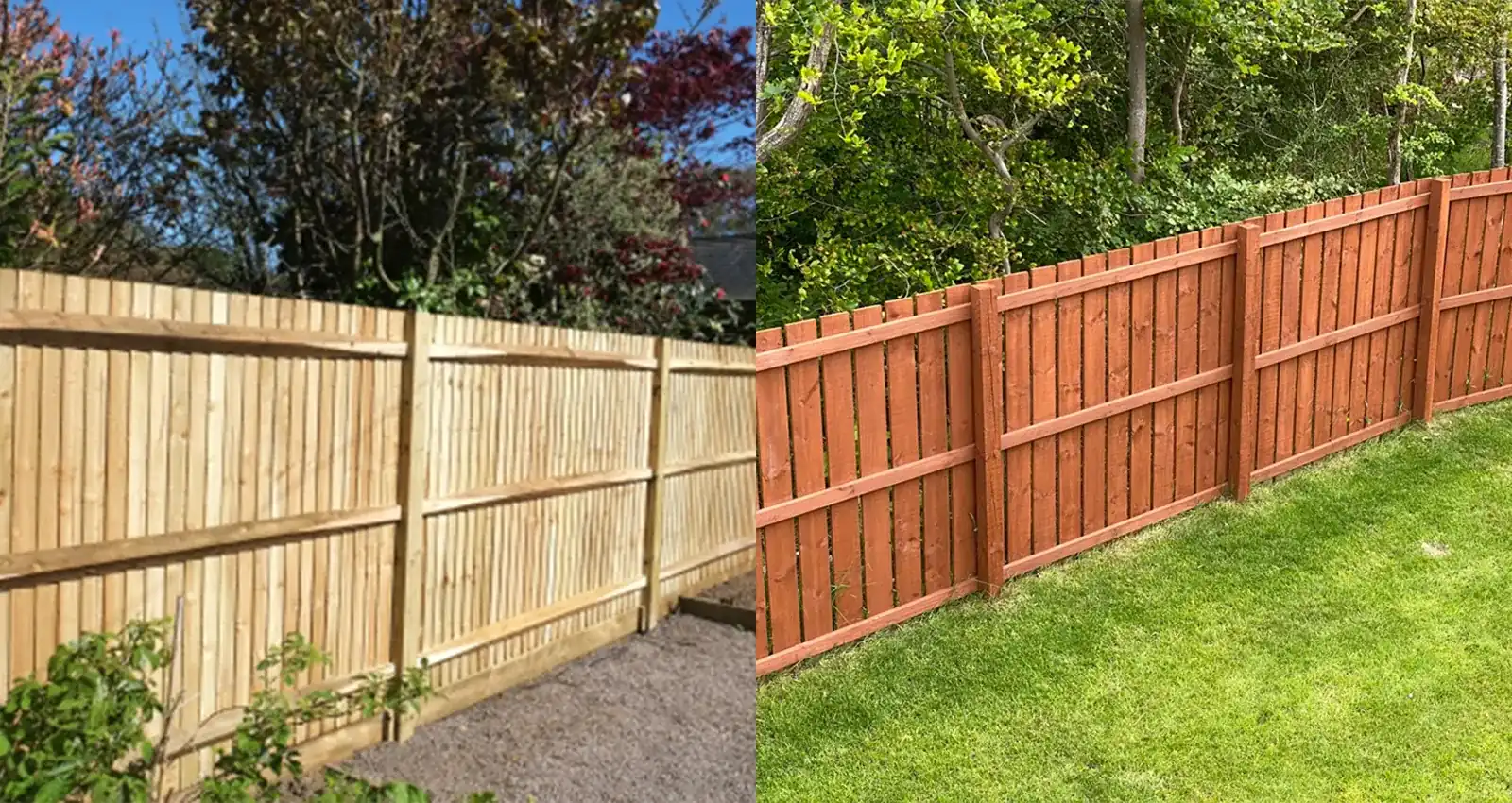
Cedar (specifically Western Red Cedar, though Eastern White Cedar is sometimes used) is a naturally rot-resistant softwood. The wood contains natural oils and tannins that resist insect damage, fungal decay, and moisture penetration. These rot-resistant properties are inherent to the wood — they're not added through chemical treatment. Cedar develops its weathering characteristics naturally over time, eventually fading from its warm reddish-brown to a silver-gray patina.
Pressure-treated pine is exactly what it sounds like: pine (typically Southern Yellow Pine) that's been chemically treated to resist rot and insect damage. The treatment process involves placing the wood in a pressurized chamber and forcing preservative chemicals deep into the wood fibers. Modern pressure-treatment uses copper-based chemicals (often labeled ACQ or copper azole) which are much safer than the older CCA treatments that contained arsenic. The treated wood is greenish initially, fading to a more natural brown tone over the first year, then weathering to gray over several years.
Cedar vs. Pressure-Treated: The Quick Comparison
When Cedar Is the Right Choice
Cedar wins in several specific situations. If any of these match your priorities, cedar is worth the upfront premium:
- You want the longest possible lifespan from wood. Cedar lasts 5-10 years longer than pressure-treated pine in most NJ installations. If you're planning to keep the fence for 25+ years, cedar's lifespan advantage compounds.
- Aesthetic matters as much as function. Cedar's warm color and natural grain look better than pressure-treated wood, especially during the first 5-10 years. If your fence is a visible front-yard or curb-appeal element, cedar earns its premium.
- You want a chemical-free wood fence. Cedar contains no added preservatives — just naturally rot-resistant wood. This matters for some homeowners with chemical sensitivities, edible gardens immediately adjacent to the fence, or general preference for natural materials.
- You appreciate the weathered look. Cedar's silver-gray patina is one of the most beautiful natural fence aesthetics in residential design. If you want a fence that develops character over time without staining, cedar does this naturally.
- You don't mind paying for quality. Cedar costs roughly 50-100% more than pressure-treated wood, but the difference is in real durability and appearance. For homeowners optimizing for quality over budget, cedar is the standard answer.
When cedar is right, it's gorgeous. We've installed cedar fences that look better at year 10 than they did on installation day — natural weathering, mature landscape integration, and the kind of timeless look that pressure-treated wood can't quite achieve.
When Pressure-Treated Is the Right Choice
Pressure-treated pine wins in different situations. If any of these match your priorities, pressure-treated is genuinely the smarter choice — not a compromise:
- Budget is the primary constraint. Pressure-treated is the most affordable wood option per linear foot — typically 30-50% cheaper than cedar. If you need a fence now and budget is tight, pressure-treated gets you across the finish line with a quality wood fence.
- You plan to paint or stain the fence. Cedar's natural grain is beautiful UNPAINTED. Once you paint or stain over it, the cedar advantage largely disappears — you're paying premium for wood that's hidden behind paint. Pressure-treated takes paint well (after a 6-12 month seasoning period) and costs much less.
- You're installing a utility or back-property fence. Not every fence needs to be a show piece. If you're fencing a back property line that won't be visible from your house or street, the aesthetic premium of cedar is wasted. Pressure-treated does the functional job for less.
- You're fencing a large area. For large fence runs (200+ linear feet), the cost difference between cedar and pressure-treated becomes substantial. Pressure-treated lets you fence more area within the same budget.
- You want a fence that will be painted white. Cedar can be painted white, but the natural cedar character is completely hidden. White painted pressure-treated wood looks essentially identical to white painted cedar — and costs significantly less.
- You expect to be in the home short-term. If you're planning to sell within 5-10 years, pressure-treated's slightly shorter lifespan doesn't affect you. You'll be gone before the lifespan disadvantage matters.
Pressure-treated wood has a reputation for being "the cheap option." It's not. It's a legitimate engineered material that performs well in residential fence applications and saves real money. For the right situations, it's the smarter choice — and we install it regularly without apology.
Common Questions About Cedar vs. Pressure-Treated
Ready to Discuss Your Wood Fence Project?
Get a free, on-site estimate from the owners of Fred's Fence. We'll walk your property, show you cedar and pressure-treated samples, talk through tradeoffs for your specific situation, and provide a written quote good for 30 days.
NJ Licensed · 5-Year Labor Warranty on All Wood Installations · 15+ Years Experience · Same-Day Financing through Wisetack