
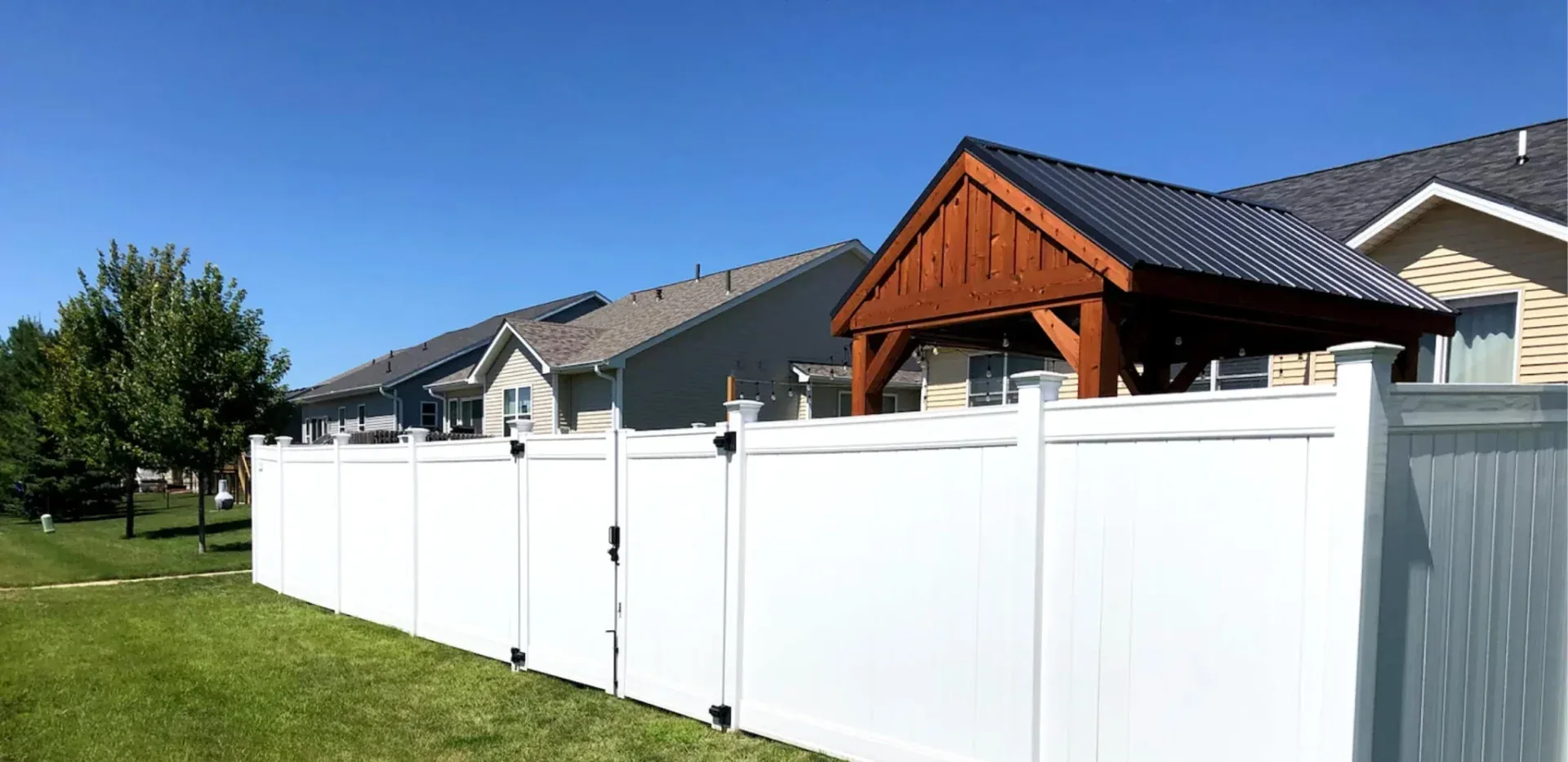
VINYL FENCE LIFESPAN GUIDE
How Long Does a Vinyl Fence Last? An Honest Answer
The short answer: 30+ years for quality vinyl installed correctly. The longer answer involves material quality, installation craftsmanship, NJ climate considerations, and the warranty backing. From a contractor with 15+ years installing vinyl across central New Jersey.
The Short Answer (Then We'll Get Into Specifics)
Quality vinyl fencing installed correctly will last 30 or more years in central New Jersey conditions. Most vinyl manufacturers offer a lifetime material warranty against cracking, peeling, fading, and structural failure — meaning the material itself is engineered to outlast the homeowner's tenure in the house.
The 30+ Year Claim, Unpacked
Modern vinyl fencing is fundamentally different from the early-generation vinyl that came onto the market in the 1990s. Today's vinyl features:
- ·UV inhibitors engineered into the material itself (not just surface coatings)
- ·Impact modifiers that prevent cracking in cold weather
- ·Improved stabilizers that prevent yellowing and brittleness over time
- ·Manufacturer warranties of 25+ years (often lifetime)
When we say "30+ years," we mean it. Vinyl fences installed in the early 2000s — using technology that's already been surpassed by modern manufacturing — are still standing in NJ today, still functional, still backed by their original warranties.
That said, "30+ years" isn't a guarantee for every vinyl fence. The actual lifespan depends on the quality of the material you purchased, the quality of the installation, and how the fence has been treated since. The rest of this article walks through what affects vinyl fence lifespan and how to make sure yours hits the high end of the range.
5 Factors That Determine How Long Your Vinyl Fence Will Last
Material Quality (Thickness and Grade)
Not all vinyl is created equal. The vinyl fence market has multiple quality tiers, and the cheapest options (often imported, often available at big-box home improvement stores) cut corners on material thickness and additive quality. The difference matters significantly in real-world lifespan.
What to look for in quality vinyl: material thickness of at least 0.090 inches (commercial-grade), UV stabilizers throughout the material, impact modifiers rated for sub-zero temperatures, and manufacturer warranty of 25+ years. The vinyl we install meets all of these standards — and we don't carry anything that doesn't.
The cheap vinyl alternative: thinner walls (often 0.060 inches or less), surface-only UV protection that fails after 10-15 years, brittle behavior in cold weather, and warranties that exclude common failure modes. These fences can last 15-20 years but rarely reach 30.
Installation Quality
The single biggest factor in vinyl fence lifespan after material quality is HOW the fence was installed. A premium vinyl fence installed poorly will fail before a budget vinyl fence installed correctly.
Critical installation factors: post depth (must be below frost line, typically 36-42 inches in NJ), concrete footings (every post should be set in concrete, not just dirt), proper alignment (panels should be level and plumb), correct hardware (galvanized or stainless steel hardware that won't rust into the vinyl).
Common installation failures: posts set too shallow that heave with frost cycles, panels misaligned that stress the connection points, hardware that rusts and stains the vinyl, or post holes filled with dirt instead of concrete. These shortcuts may not show problems for 5-10 years, but they cause premature failure.
Climate and Weather Exposure
NJ's climate is actually well-suited to vinyl fencing. Our temperature range (0°F to 95°F typically) sits within vinyl's design tolerance. Our humidity levels don't accelerate degradation. Our UV exposure is moderate compared to southern states.
However, certain exposure conditions accelerate vinyl aging:
- ·Full south-facing sun exposure (more UV stress than north-facing fences)
- ·Reflected heat from concrete or asphalt nearby (raises material temperature)
- ·Heavy snow accumulation that stresses panels
- ·Proximity to road salt application (causes hardware corrosion)
Fences in NJ that face these conditions may need replacement components (typically gate hardware first) sooner than fences in protected locations. Most still reach 25-30 years; some may need a hardware refresh around year 20.
Impact and Maintenance Damage
Vinyl is impact-resistant but not impact-proof. The most common cause of vinyl fence damage isn't aging — it's accidents. Lawn equipment hitting the fence, vehicles backing into it, fallen tree branches, sports equipment, and ice or snow buildup can crack or break vinyl panels.
The good news: damaged vinyl panels can be replaced individually. We've replaced single panels on fences 15+ years old to keep the rest of the fence in service for another decade. The replacement panel may not perfectly match the weathered original, but the fence continues to function.
The bad news: significant impact damage (a tree falling on the fence, or a vehicle going through it) usually means replacing a full section. Plan for this possibility in any long-term ownership scenario.
Warranty Coverage and Claims
A "lifetime warranty" only matters if (a) the manufacturer is still in business when you need it, and (b) the warranty actually covers your specific failure mode. Cheap vinyl warranties often exclude the things that actually fail — UV degradation, brittle cracking, or color shifts.
Quality vinyl warranties (the kind we offer through our materials) cover:
- ·Cracking and breaking from temperature exposure
- ·Peeling and flaking
- ·Fading beyond manufacturer specifications
- ·Structural defects in posts, panels, and rails
What's typically NOT covered: damage from impact, damage from non-vinyl-rated cleaning chemicals, modifications by the homeowner, or general wear and tear. Most warranty exclusions are reasonable.
What Actually Goes Wrong With Vinyl Fences (and How to Prevent It)
After 15+ years of installations across NJ, here's what we actually see fail on vinyl fences — and how to prevent each issue:
- Gate hinges and latches wearing out (typical year 10-15). Gate hardware is exposed to constant use and corrosion. The fix: replace hardware as needed — costs $50-150 per gate and adds another decade to the gate's lifespan.
- Posts loosening due to frost heaving (typical year 5-10). If posts weren't installed below frost line with proper concrete footings, freeze-thaw cycles can heave them out of alignment. The fix: re-setting individual posts. Prevention: insist on proper installation depth and concrete footings during initial install.
- Single panel impact damage (varies). A fallen tree branch, an errant lawn mower, or a kids' bicycle can crack a single panel. The fix: replace just the damaged panel — typically $80-200 for materials.
- Color fade in extreme sun exposure (typical year 20-30+). Even premium vinyl will eventually show subtle color shifts after decades of UV exposure. This is mostly aesthetic and doesn't affect structural integrity. The fix: there isn't one — but the fade is gradual and rarely problematic.
- Hardware staining from rust (typical year 15-20+). Lower-quality hardware can rust and stain the surrounding vinyl. The fix: replace stained sections and upgrade to stainless steel hardware. Prevention: use stainless steel from initial installation.
Notice what's NOT on this list: the vinyl material itself rotting, the panels falling apart, or the fence collapsing. Quality vinyl installed correctly doesn't have those failure modes. The things that do go wrong are repairable, predictable, and rarely require full fence replacement.
How to Get the Most Years Out of Your Vinyl Fence
Vinyl fences are nearly maintenance-free, but a few simple practices extend their lifespan and keep them looking new:
- 1.Pressure wash annually (or as needed). Use a standard garden hose with attachment or pressure washer on a low setting. Avoid harsh chemical cleaners — soap and water work fine for most dirt.
- 2.Inspect gate hardware twice a year. Tighten loose screws, lubricate hinges with a non-petroleum lubricant, and replace worn parts before they fail catastrophically.
- 3.Trim landscaping back from the fence. Plants growing against vinyl can trap moisture and create staining. Keep vegetation 6-12 inches away.
- 4.Remove snow and ice buildup. Heavy snow can stress lower panels. Brush off accumulation rather than letting it sit.
- 5.Address damage immediately. A small crack from impact will spread over time. A single damaged panel replaced today is cheaper and easier than waiting until it's worse.
- 6.Don't paint or modify the vinyl. Paint and stains void manufacturer warranties and rarely look as good as factory color. If you want a different color, choose it from the manufacturer's options during installation.
How Vinyl's Lifespan Compares to Other Fence Materials
Vinyl's 30+ year lifespan puts it among the longest-lasting residential fence materials available. Here's how it compares to alternatives we install:
- Wood fencing: 15-25 years for cedar; 15-20 years for pressure-treated. Significant maintenance required throughout (staining, sealing). Vinyl typically outlasts wood by 5-15 years.
- Aluminum fencing: 30+ years with virtually no maintenance. Vinyl and aluminum are comparable in lifespan, with different aesthetic appeals and price points.
- Composite fencing: 30+ years with lifetime material warranty. Premium price but comparable durability to vinyl.
- Chain link fencing: 20-30 years for galvanized; 30+ for vinyl-coated. Chain link is more affordable but doesn't carry the same aesthetic appeal as vinyl.
- Wrought iron: 30-50+ years if properly maintained (must be painted every 3-5 years). Decorative aluminum has largely replaced wrought iron because it offers similar aesthetics without the maintenance.
Vinyl wins on the combination of long lifespan plus minimal maintenance. Aluminum is comparable but more expensive. Wood is cheaper upfront but requires ongoing maintenance and won't last as long. For homeowners optimizing total cost of ownership over decades, vinyl is the strongest performer.
For a deeper comparison between wood and vinyl, read our Wood vs. Vinyl Fence guide →
When Is It Time to Replace a Vinyl Fence?
Honest question — at what point does a vinyl fence need replacement? Some signs to watch for:
- Multiple panels cracked or broken from age (not impact). If you're replacing 3-4+ panels per year on a fence 25+ years old, the material is reaching end of life.
- Posts heaving repeatedly despite re-setting. If the underlying installation is failing, repair costs may exceed the value of keeping the fence in place.
- Hardware corrosion affecting structural integrity. Old galvanized hardware that's deteriorated can compromise the fence's ability to stay aligned.
- The fence simply looks tired. Sometimes after 25-30 years, even with structural integrity intact, a fence looks old enough that replacement improves curb appeal and home value.
Most homeowners who reach the 25-30 year point with a quality vinyl fence find that minor repairs keep it functional for another 5-10 years if they want. The decision to replace is often more about preference than necessity at that point.
Ready for a Vinyl Fence Built to Last 30+ Years?
Get a free, on-site estimate from the owners of Fred's Fence. We install premium vinyl fencing backed by lifetime material warranty and 5-year labor warranty. Written quote good for 30 days, no obligation.
NJ Licensed · Lifetime Material Warranty · 5-Year Labor Warranty · 15+ Years Experience · 3,000+ Installs